When you bring people together, make it count. That was the driving force behind the
Facilitative Leadership Workshop where more than 30 business, non-profit and church
leaders gathered for a lively morning of collaborative learning on Oct. 16 at the
Westmont Downtown | Keith Center.
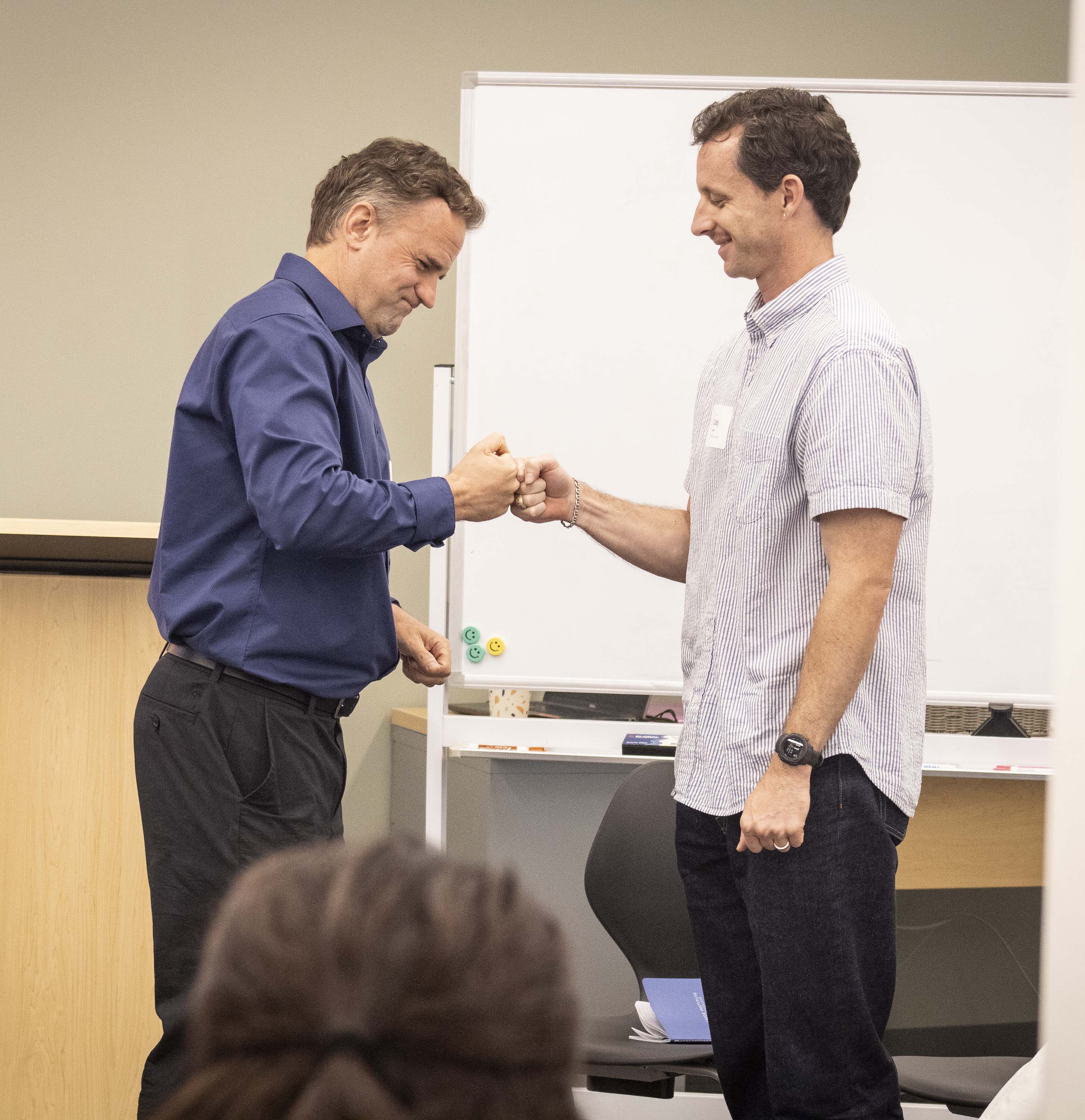
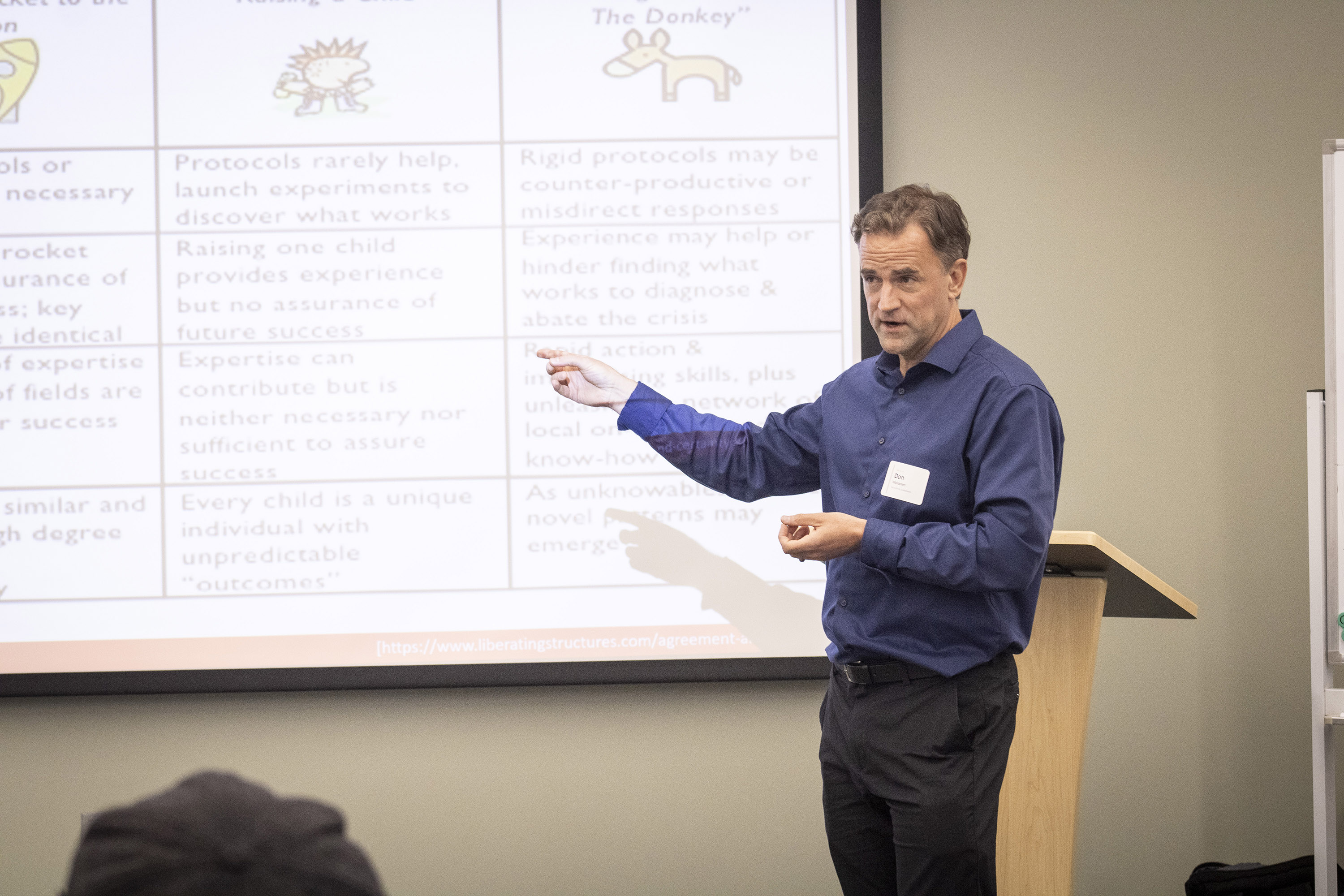
“While large corporations regularly hire high-level consultants to train their executives in facilitative leadership, non-profits and faith-based organizations rarely get that chance,” said organizer Deborah Dunn, Westmont professor of communication studies. “I decided to change the script.”
She invited alumnus Don Waisanen, professor of public affairs at CUNY’s Baruch College and author of “Leadership Standpoints and Improv for Democracy,” who facilitated the talk that was co-sponsored by the Westmont Center for Dialogue and Deliberation and the Gaede Institute for the Liberal Arts.
The workshop aimed to shift leadership mindsets from “predict and control” to “sense and respond.” During interactive exercises, Waisanen challenged attendees to break away from rigid, outdated formats, such as 150-year-old parliamentary procedures, and instead embrace dynamic, participatory meeting designs like “1-2-4-All.”
“We human beings have two forces constantly working against us in groups,” Waisanen said. “One is the underuse of information that actually exists in the room, and the other is social pressures.” He urged leaders to structure conversations that draw out every voice, adding, “As a facilitative leader, we want to be able to flex and not just get stuck in one way of being.”
Waisanen also walked participants through navigating the unavoidable friction that happens when groups tackle complex problems. “When we’re in that territory of complicated problems, we hit what’s called the groan zone,” Waisanen noted. “It’s going to get messy and difficult. There will be negative feelings going on. Legitimize this. It’s good. It means we’re really stretching before we hit this convergence zone and make decisions together.”
Local community members found the practical, hands-on approach both refreshing and immediately applicable.
Jeff Atlas, representing Ocean Hills Covenant Church, highlighted how the workshop expanded his perspective on being flexible through difficult dynamics. “I’m always interested in learning to be a more effective leader and communicator in all the areas that I touch,” he said. “Being an adaptive facilitator depends on the situation. When it gets to crisis mode, it definitely changes, and it’s important to be aware of that ability to pivot the style that you were using.”
For small business owners Adam and Katie Schuette, who have run a wedding planning company together since 2008, the morning felt like an invigorating return to the classroom.
“This kind of discussion is refreshing to me,” Adam Schuette said. “How do you grow the next generation, and move forward in every conversation?”
Katie Schuette noted how Waisanen’s insights on leadership status and authority hit home. “We need to get out of our defaults,” she observed. “My default is that of leadership or a CEO position, and it was helpful to realize that you can shift into a more equitable position with people on your team without losing that authority overall.”
Following the morning sessions, participants gathered over a complimentary lunch to continue discussing how to bring these collaborative tools back to their own teams, boardrooms and congregations.