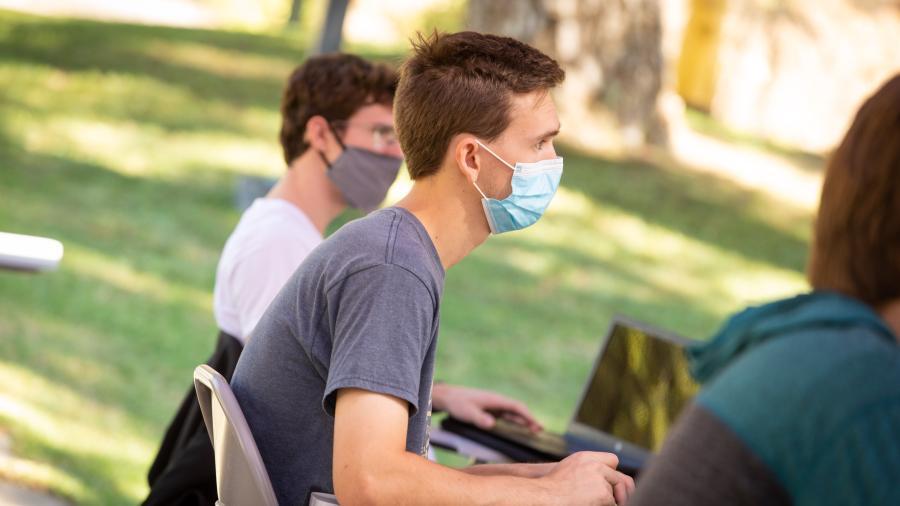
Very few Westmont students have tested positive for the coronavirus since returning to campus in mid-September, and faculty and staff are finding innovative ways for students to thrive while staying safe.
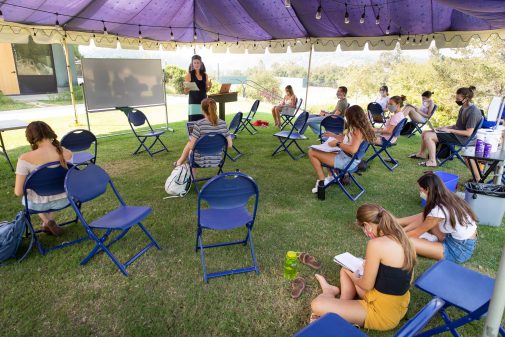
More than 90 percent of students chose to return to campus rather than learning remotely in their homes. All students were tested for the virus within an hour of arriving on campus. “The response to in-person learning and living in community demonstrates how much students crave being together,” said Irene Neller, vice president for enrollment. “Even with our strict safety guidelines, they’ve chosen to live in residence halls and study under tents.”
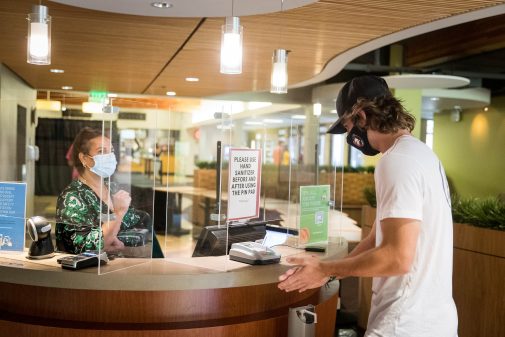
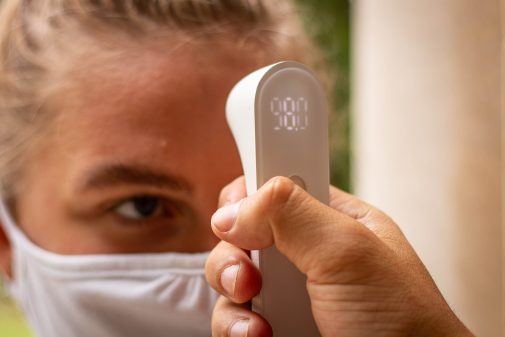
In about a week’s time, Westmont tested more than 1,400 students, faculty and staff with only five positive results. “This is great,” says Jason Tavarez, Westmont director of institutional resilience. “Our positivity rate is less than half a percent, which is well below any of the thresholds we set. We’re one of the few schools in California able to offer outdoor classes in person because students followed the rules and protocols. I’m impressed that everyone approached this endeavor with such seriousness.”
 The college’s isolation, quarantine and contact-tracing efforts have been incredibly
successful. As of Oct. 22, and after a second round of randomly testing 400 students,
staff and faculty, none were positive. The college posts daily updates at westmont.edu/covid-19.
Westmont will offer free flu vaccines on campus in partnership with Rite Aid and encourages
everyone on campus to participate Oct. 27-28.
Students in isolation move to private rooms with their own bathroom, shower and refrigerator and get their meals delivered. They stay in the room until they clear the appropriate protocols under the direction of Dr. David Hernandez in the Westmont Student Health Center.
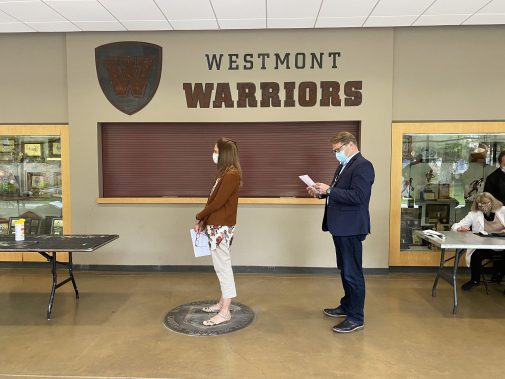
“During our contact-tracing efforts, we’ve had incredible responses from students,” Tavarez says. “Contact tracing is the key way to stop the spread of virus on campus, and students have responded promptly to our calls and emails, letting us know who other potential contacts might be.”
As Santa Barbara County’s COVID-19 tier assignment improved in mid-October, Westmont moved to in person, indoor instruction using only 25 percent of the capacity of each classroom. “This is great news because it means we can provide indoor classroom experiences and include more people in art studios and science labs, which allows greater access to experiments,” Tavarez says.
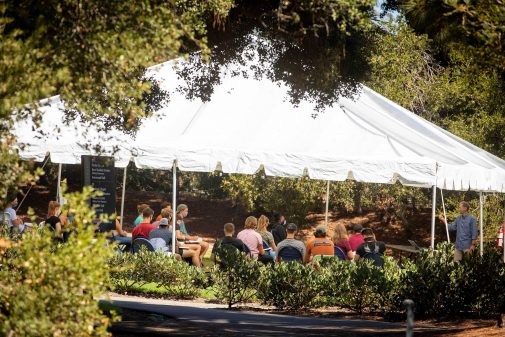
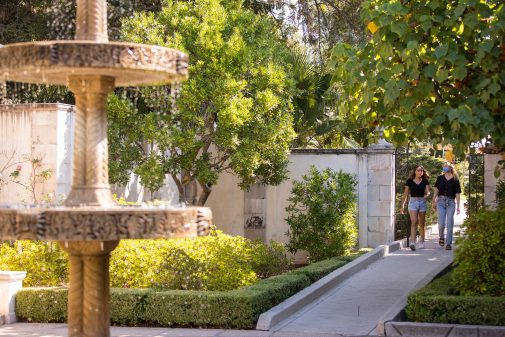 The college installed large, outdoor tents to provide space for socially distant classes
and shady eating areas. The outdoor tents will remain through the fall semester as
many have enjoyed learning amidst nature’s beauty and fresh fall breezes. “We’re so
fortunate to be in Montecito,” Neller says. “Some professors have enjoyed teaching
outside so much that they've chosen to continue doing so even though they have the
opportunity to move their classes indoors. We'll continue doing some of the new ways
we've provided education. The pandemic has taught us to do business differently and
to respect the resilience of our students. We have great hope in what we've learned
as we move forward."
Students who had been quarantined helped student life staff create hospitality teams
to provide art supplies, assistance with outdoor movie parties, materials from counseling
and psychological services on emotional wellbeing, and coffee from Ritchie's Place
on lower campus.
“I’ve seen my professors exhibit creativity in the ways they're using breakout rooms in Zoom and allowing classes to meet in person outdoors while having a Zoom option for students quarantining or still living at home,” says Chloe Howard, junior anthropology major. “This is a super strange and hard time we're living in as a nation right now, but I couldn't be more proud to be a Warrior. I know we’re lucky we were able to return to campus and live with our Westmont community again.”
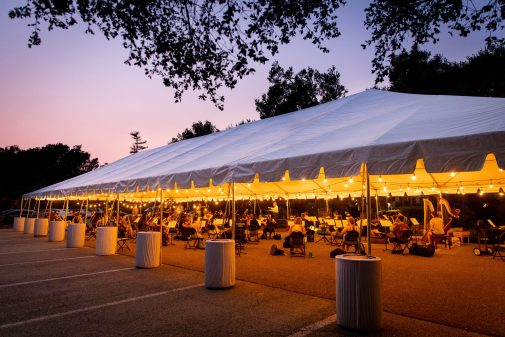 Armed with the latest studies and experiments on aerosol dispersion for musicians
and singers, Michael Shasberger, Adams professor of music and worship, has crafted
innovative plans to allow the choir and orchestra to safely perform during the pandemic.
No more than 12 singers perform at a time, and they stand in a straight line, 14 feet
apart. They wear masks and sing outside under the tent for no more than 40 minutes
at a time.
Shasberger has split up the orchestra, so no more than 26 musicians, wearing customized
masks, practice at one time. Wind and brass instruments have been fitted for bell
coverings to catch most of the dispersion. Fortunately, the masks only marginally
affect the sound quality.
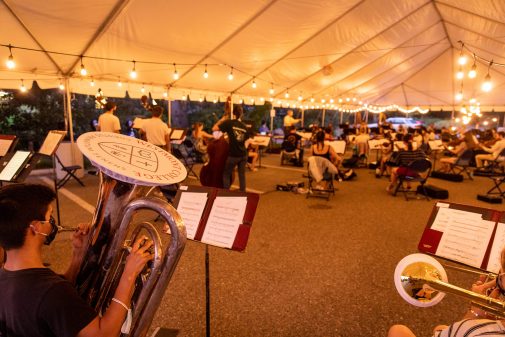 “We’ll focus on music just for winds, brass, choir arrangements and pieces written
for strings,” Shasberger says. “All will learn the same repertoire, and ensembles
of various sizes can perform.”
Rather than present Zoom-style virtual concerts, the Westmont Music Department’s Friday Night Concert Series shifted to recordings of live performances of musicians working together beginning Oct. 16 at vimeo.com/showcase/westmontmusic.
“I’m so proud of our students and their willingness to keep their campus and community safe,” says President Gayle D. Beebe “They've taken the safety protocols very seriously, and it shows. These extremely low and now non-existent COVID-19 cases since we've opened, demonstrate the high desire to learn and live together, and that’s the Westmont way.”